Evaluators
Anything that can reduce a tree can run disp, so it's cheap to try very different machines. Each one tests an idea.
Watch them run
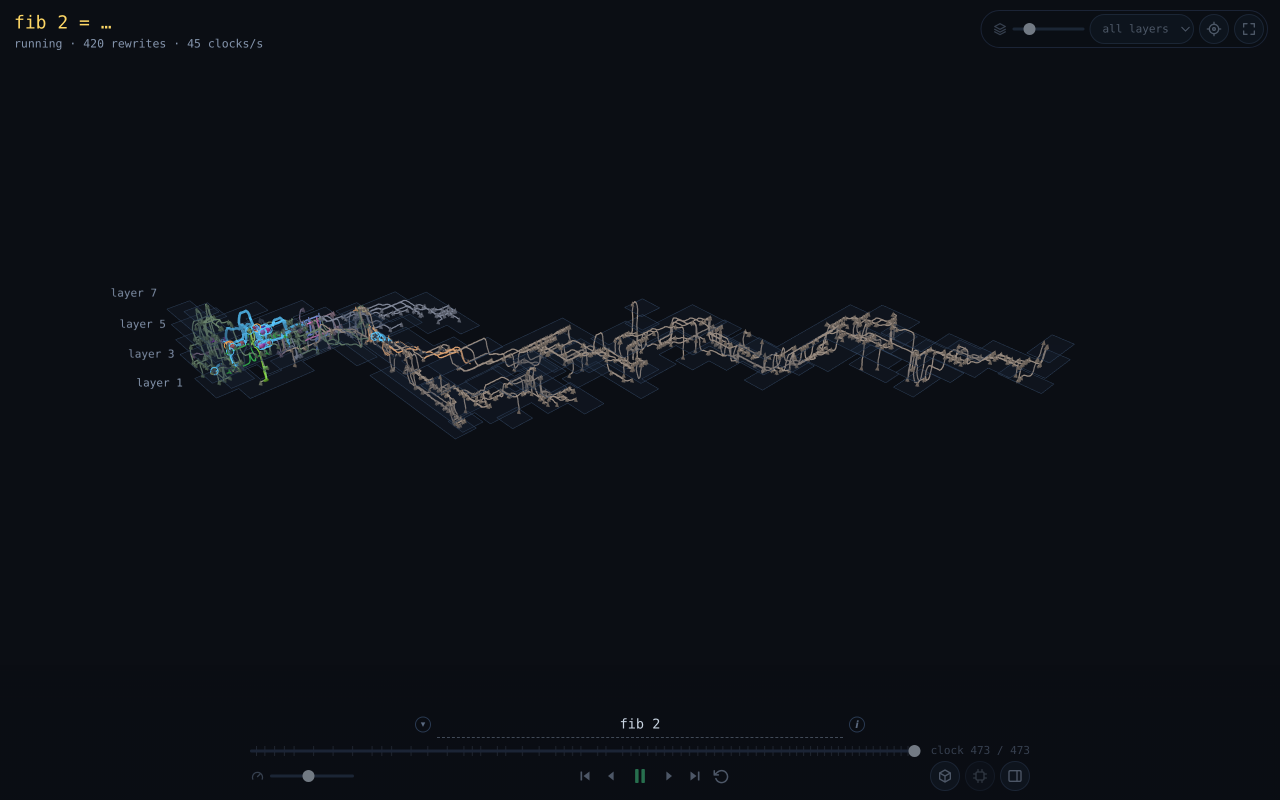
Strand lattice
Runs the net on a chip-like grid where wires take up room. Finishes all 160 test terms, and beats the address-based mesh by up to 4.2×.
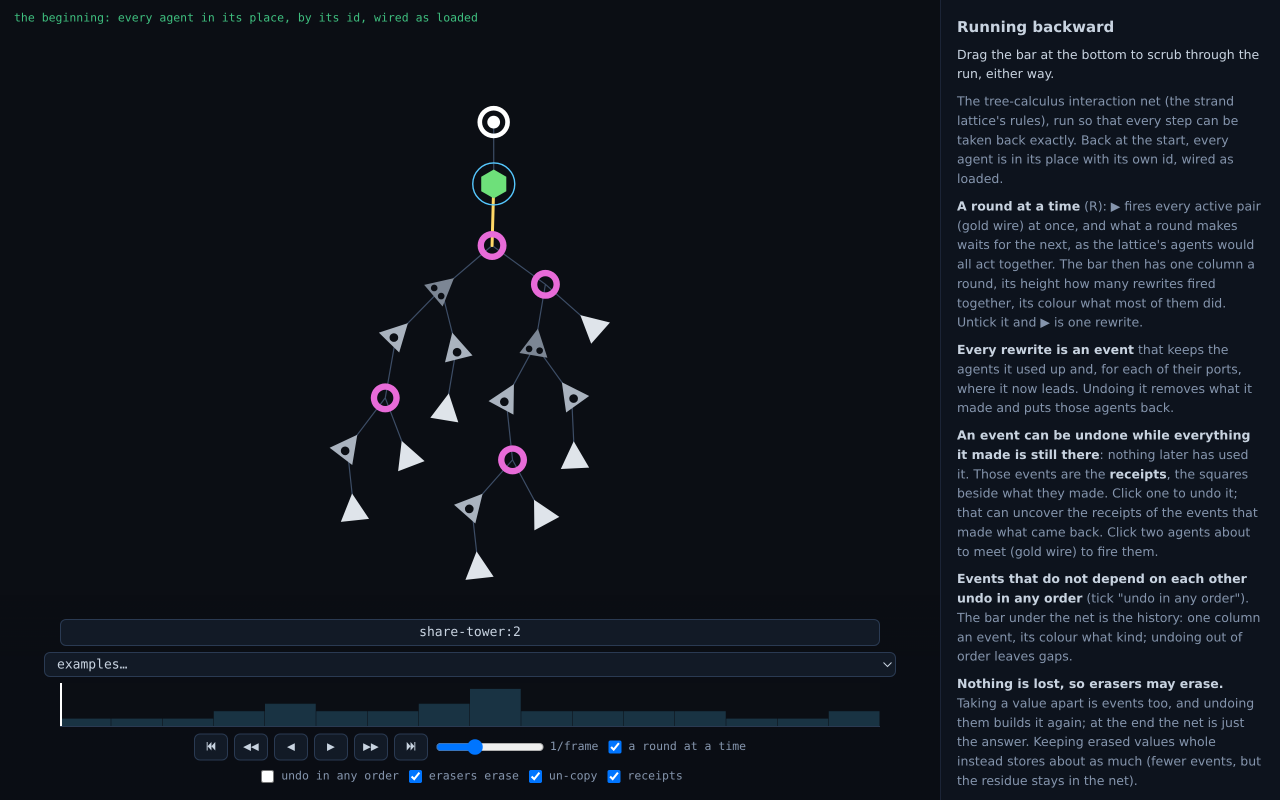
Running backward
The same net rules, with every rewrite an event you can take back, until each agent is where it started.
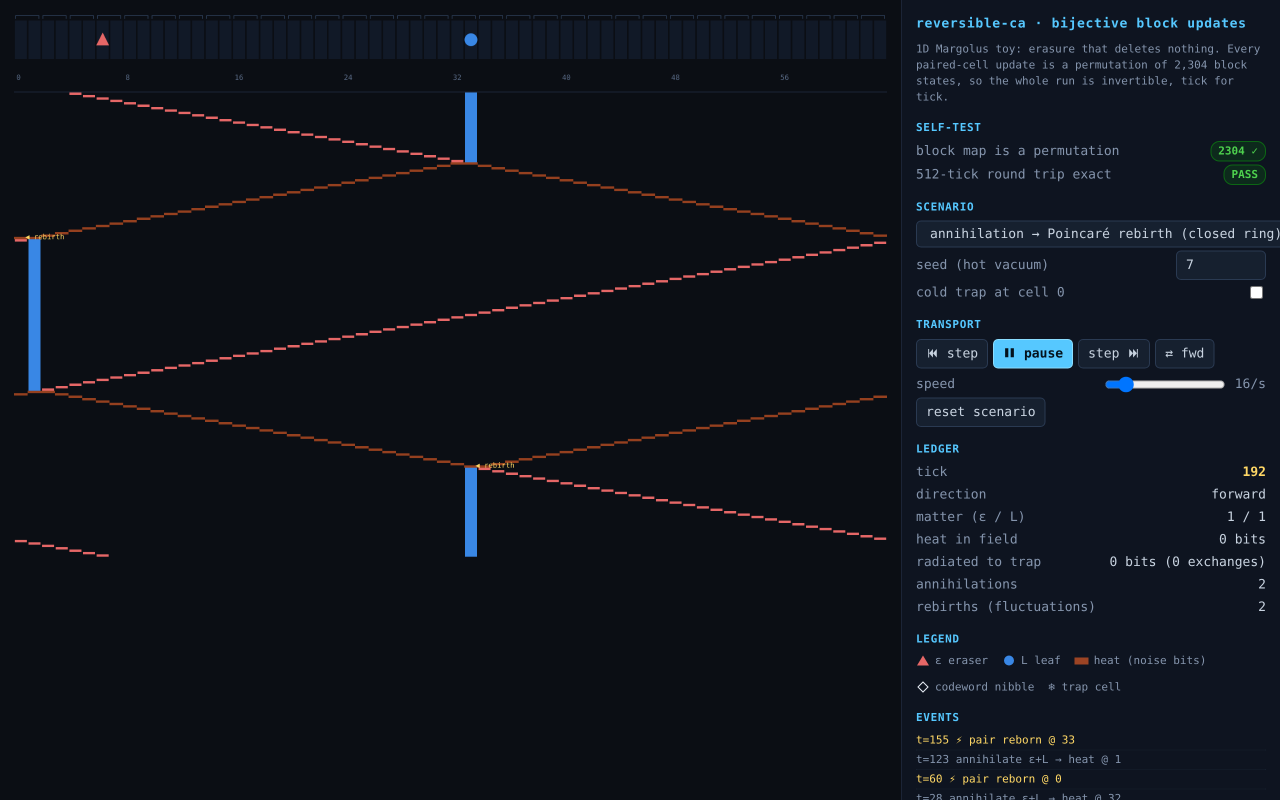
Reversible blocks
A 1D toy where every update is a permutation, so erasing turns bits into heat and a 512-tick run comes back exactly.
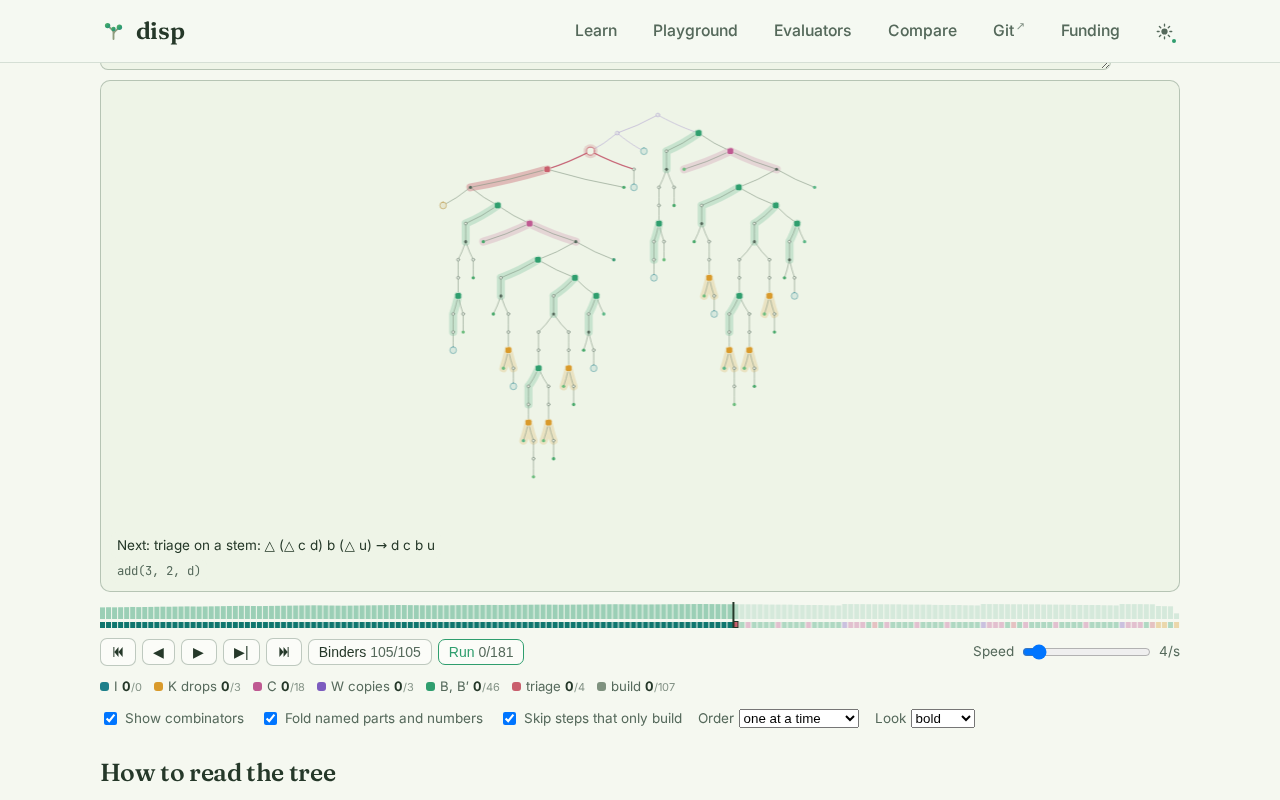
Linear tree calculus
Tree calculus in nine rules, where only K drops and only W copies. Binders come off one step at a time, then the tree runs.
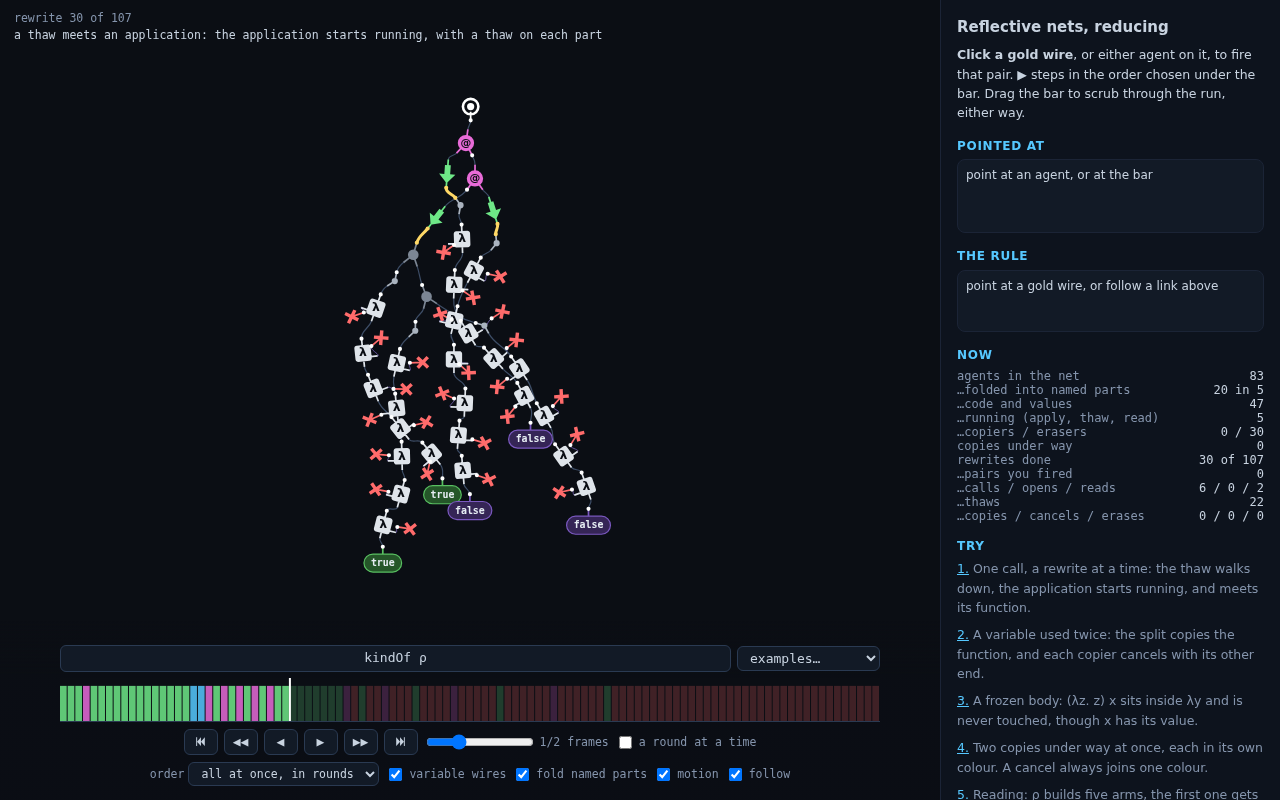
Reflective nets
A λ-calculus as a net where a function body stays frozen until it is called. Click any pair to fire it, follow copies in their own colours, and see each rule as a picture.
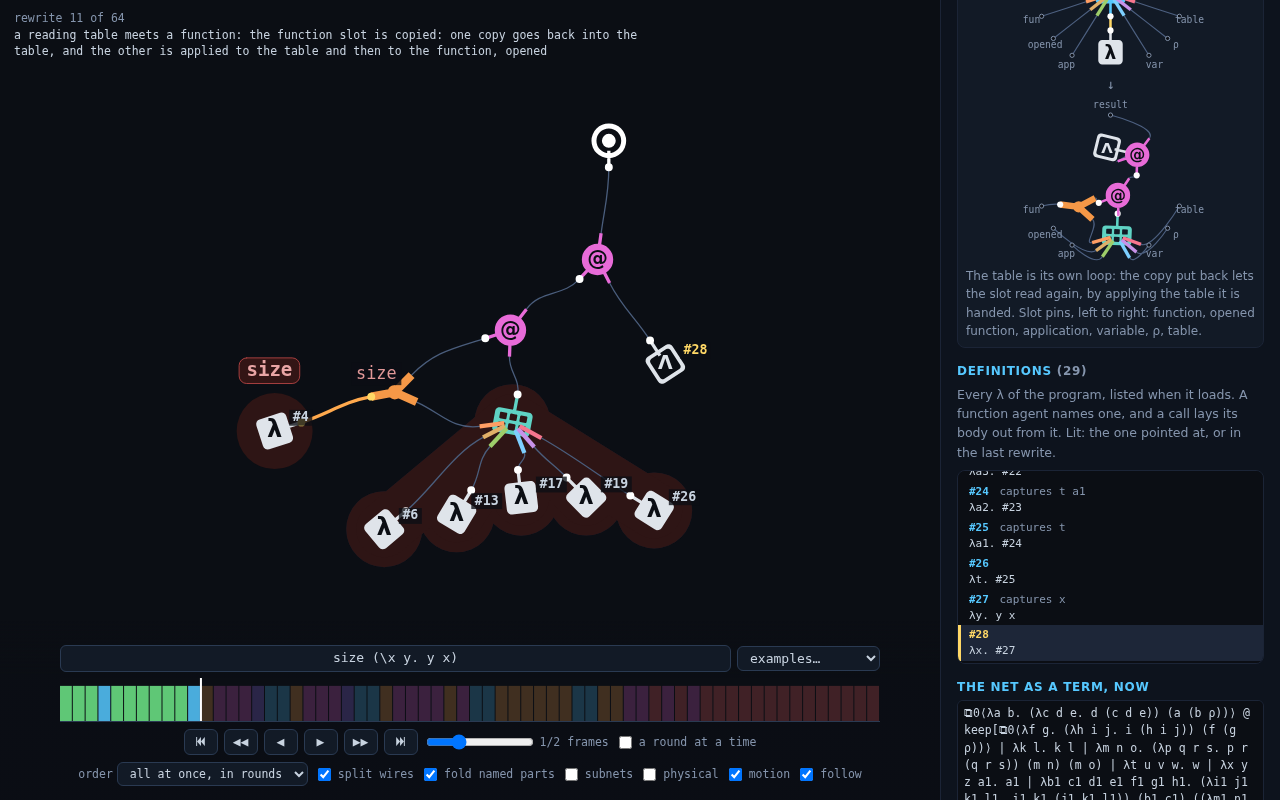
Reflective nets with tables
The same nets with every function a single agent and one kind of reader: a table that picks a slot by what it reads. Reading code takes about 11 rewrites here, where the earlier design took about 2,070.
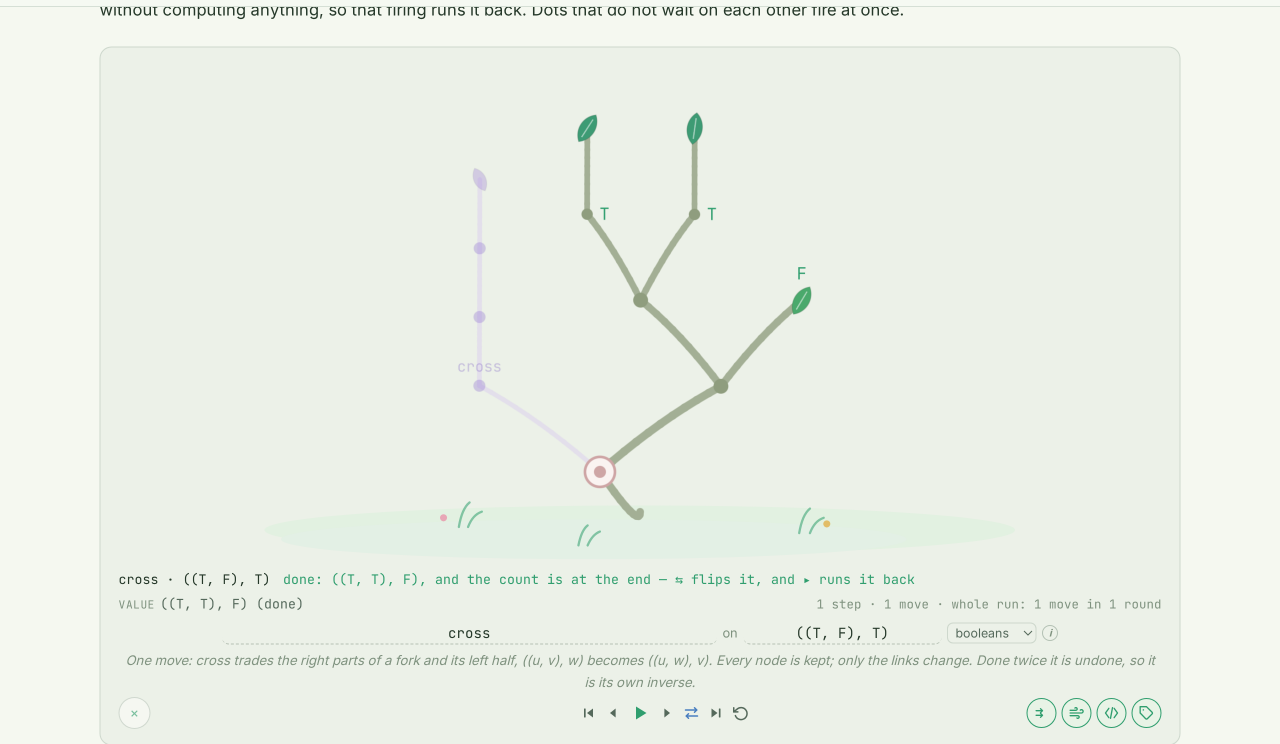
Two-way programs
Programs are trees built from five moves. Flip a run at any point, and firing runs it back.
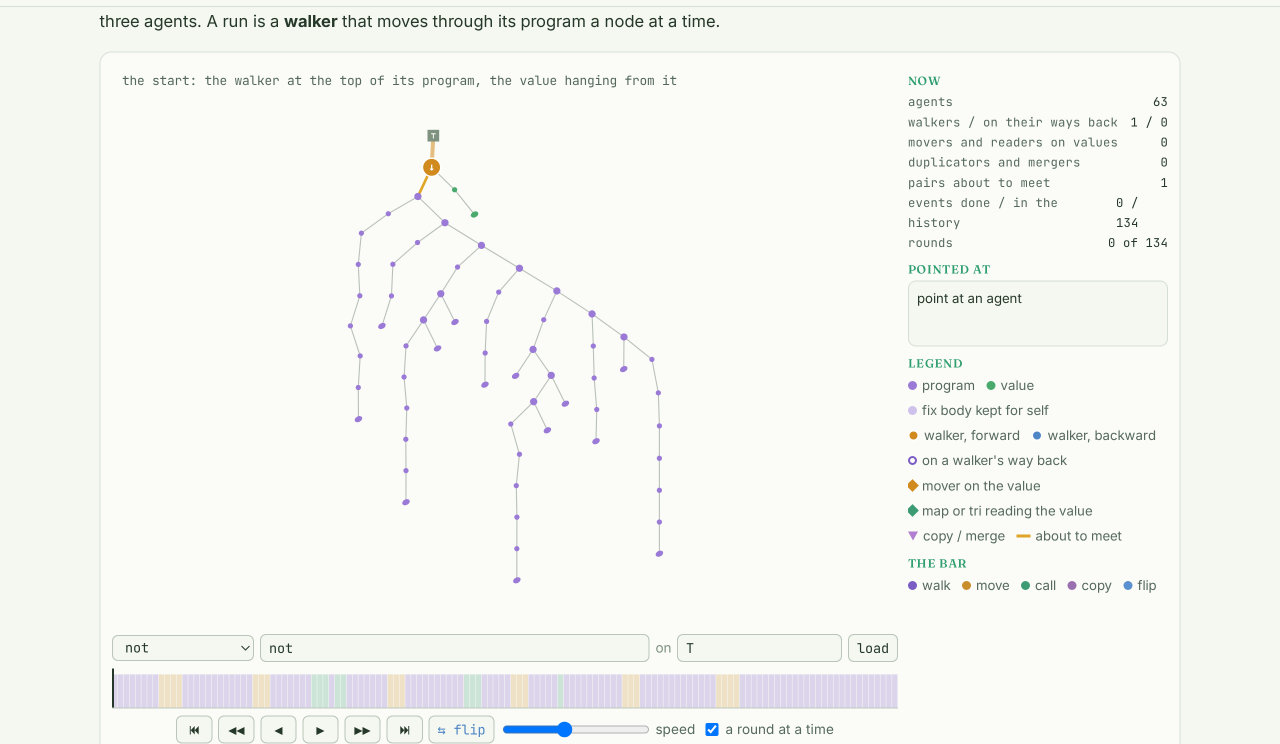
Two-way, as a net
The same programs with no counter: a walker moves through the program and leaves it unchanged.
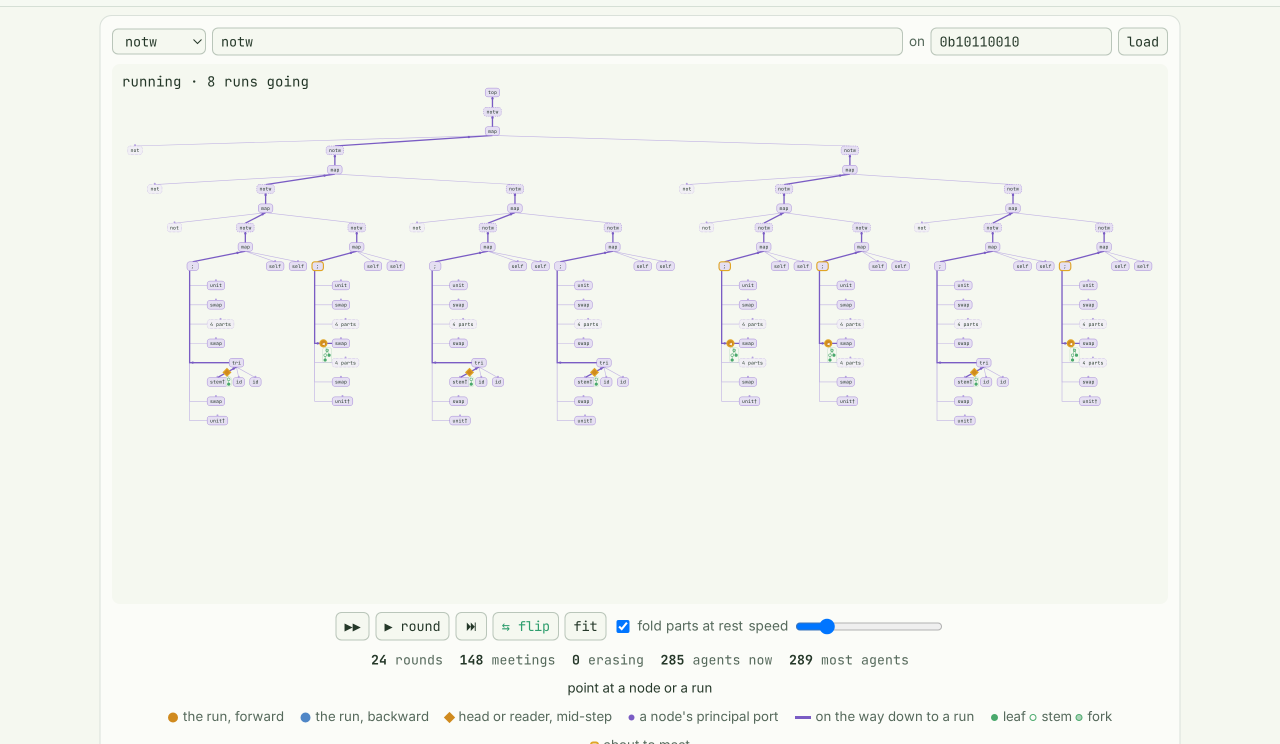
Two-way, compiled
Each part of the program becomes its own agent, and a move happens where the value meets its gate. Still in progress.
No visuals
eager and naive
The plainest correct reducers. eager defines the right answer, and every other evaluator gets compared against it.
rust-eager
The same reducer in Rust. Runs the test suite in about 2.5 minutes against 22 on eager, and powers the playground.
lambada peers
11 reducers someone else wrote, used for benchmarks and to compare answers. They don't share our bugs.
rust-ic-net
A real interaction net in memory. Gives up hash-consing to run in parallel and track which candidate did what.
tree-net
The net rules, abstract net and independent answer checker that the strand lattice is tested against.
Cascade and mesh
The first spatial machines. The cascade jammed on 30 of 160 terms, and the mesh needed an address and a router in every tile.